North Kenwood vs Historic Kenwood Home Prices Explained
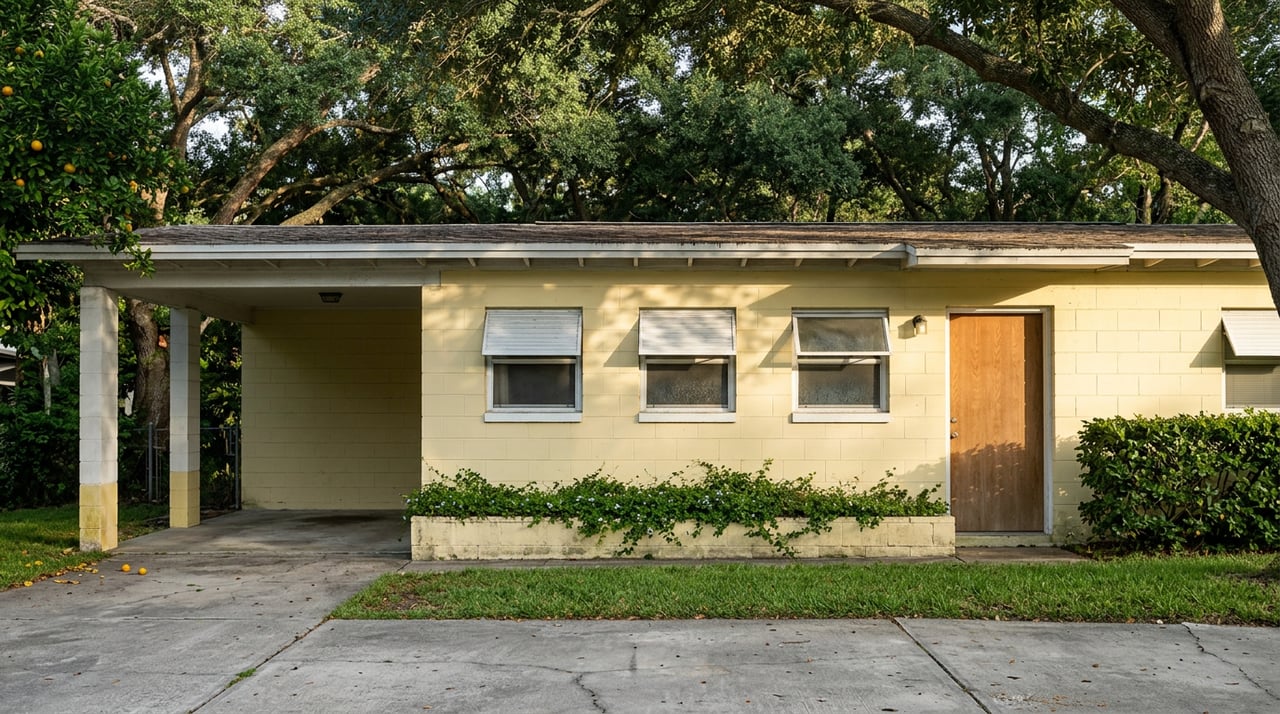
Say you're comparing St. Petersburg neighborhoods online and you type "Kenwood" into a search bar. One listing describes a craftsman bungalow on a brick street two blocks from Central Avenue's restaurant row. Another describes a 1950s ranch near an interstate on-ramp with a fenced yard and a fire pit. Both listings use the word "Kenwood" in the headline. One of them even uses both names in the same sentence, calling itself a bungalow "in Historic Kenwood" while marketing itself as sitting in "the highly sought-after Desirable North Kenwood district."
That is not a typo. It is two different neighborhoods that used to be one place, and the confusion between them is still doing real work on how buyers read prices in both.
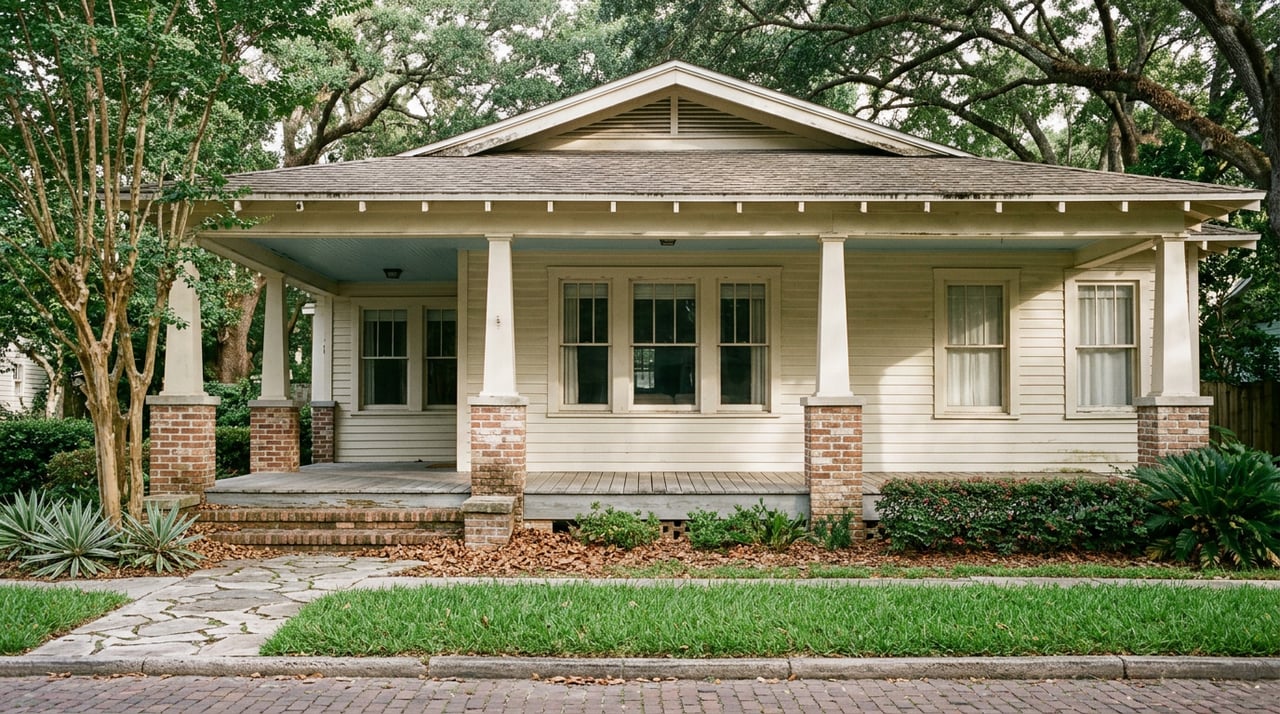
North Kenwood and Historic Kenwood grew out of the same stretch of agricultural land west of downtown St. Petersburg. According to the neighborhoods' own history, they were originally grouped together before splitting off and building separate identities, with Historic Kenwood becoming known for the deepest concentration of historic bungalows in the city and North Kenwood becoming known for its oak canopy.
The two still share a property line. North Kenwood's own neighborhood association describes its boundaries as running roughly along 22nd Avenue North to the north, 9th Avenue North to the south, 34th Street North to the east, and Interstate 275 to the west. Historic Kenwood's association places its own footprint just south of that same 9th Avenue North line. They are literally next-door neighbors sharing a street, not two names for the same place.
Before either name existed, pieces of what is now North Kenwood were known by other names entirely: Avalon, Flora Villa Estates, Pelham Manor, and Harris Farms. Fruit trees from those old groves, avocado, mango, grapefruit, orange, still show up in yards today, a small physical trace of the farmland both neighborhoods were carved from.
Once you separate the two, the price gap stops looking arbitrary and starts looking structural.
| North Kenwood | Historic Kenwood | |
|---|---|---|
| Housing era | 1940s-50s bungalows and ranches, mixed with new construction and a modern townhome community | Craftsman bungalows, colonial revivals, and American foursquares, mostly built 1920s through 1950s |
| Preservation status | Not a historic district | Sits largely within a National Register Historic District, and includes Florida's first officially designated bungalow preservation district |
| Commercial anchor | Neighborhood staples like Kissin' Cuzzins, Grumpy Gringo, and Banana Records, plus Mazzaro's Italian Market nearby | The Grand Central District, centered on the 2200 to 2700 blocks of Central Avenue |
| Recent price band | Median $430,000, average sale price $425,676, as of July 2026 | Median $634,990 over the trailing twelve months, up 2% year over year |
The historic-district status matters beyond curb appeal. Because much of Historic Kenwood sits inside a National Register district, exterior changes to contributing structures typically require review before work begins, which keeps the streetscape consistent but also adds a layer of process a North Kenwood buyer never has to think about. Bungalows there in original, unrenovated condition were starting around $390,000 to $430,000 in Q1 2026, while fully renovated homes with permitted kitchen and roof work were trading between $525,000 and $650,000, according to Stellar MLS figures reported by a regional home-buying guide. That renovation premium, plus the preservation overhead, plus direct walkability to Central Avenue's restaurant row, is a big part of what separates the two price bands. It is not simply that one neighborhood is older.
Here is the part that should change how you read any single price number for North Kenwood specifically: even one listing site can't agree with itself about what the neighborhood's median actually is.
On the same page where Homes.com reported North Kenwood's median at $430,000 with an average sale price of $425,676 as of July 2026, the trailing twelve-month figure on that same listing showed a materially different median of $370,000, down 16% year over year. Two numbers, one page, describing the same neighborhood.
The reason isn't a data error. It's the housing stock. In July 2026, North Kenwood had 20 houses on the market ranging from $245,000 to $1,020,000. That is not a tight cluster around a single "typical" home, it is a fixer bungalow on one end and a new-construction infill build on the other, with a 1925 house in between whose entrance sign reads "Golem's Winter Headquarters." A median calculated from a handful of closings each month will swing hard depending on which end of that spread happened to sell.
Uptown Kenwood adds another layer. It's a 69-unit concrete-block townhome community built out between 2019 and 2022, with floor plans from 1,503 to 2,100 square feet and amenities that include a pool, a dog park, and a fire pit, sitting just a few blocks from Grand Central. As of January 2026, four Uptown Kenwood townhomes had sold over the prior year at an average price of $675,000 and roughly $306 per square foot. That's a meaningfully different product than a 1948 cottage two streets away, and when a townhome closing lands in the same monthly sample as a bungalow closing, the blended median tells you less than either number alone. It's worth noting that the North Kenwood Neighborhood Association's own listed meeting address, 1190 25th Street North, is the same address as Uptown Kenwood's clubhouse. The townhomes aren't a separate identity carved out from the neighborhood. They're inside it, pulling the numbers around from within.
There's also a concrete, current reason to expect North Kenwood's housing mix to keep shifting: the former Edward White Hospital, a six-story, 121,000-square-foot building at 2323 9th Avenue North, sits adjacent to Booker Creek Park and is being converted into the Edward White Campus, a $29 million project combining a senior housing community, the St. Petersburg Housing Authority's relocated administrative offices, and a clinic operated by Evara Health. The senior housing component includes 60 one-bedroom units, seven studio units, and four two-bedroom apartments for income-qualified residents. Funding came through a mix of federal ARPA dollars, Penny for Pinellas revenue, and a grant from the Federal Home Loan Bank of New York sponsored by Valley Bank, with construction led by St. Pete-based LEMA Construction. The project was targeted to reach completion sometime in 2026.
That's not a comp for a single-family buyer, but it does mean the immediate area around Booker Creek Park, already a hub with pickleball and basketball courts and a fishing pier, is adding new residents and new foot traffic this year, on top of the existing mix of bungalows, ranches, and townhomes that already make North Kenwood's median hard to pin down.
If you're deciding between North Kenwood and Historic Kenwood, or trying to figure out which one a listing is actually describing, a few things are worth doing before you lean on any single headline number.
Are North Kenwood and Historic Kenwood actually different neighborhoods, or just two names for the same area? They're different neighborhoods with separate neighborhood associations and a shared border along 9th Avenue North. They grew from the same land before splitting into distinct identities.
Why do North Kenwood home prices look so different depending on which site I check? The neighborhood's housing stock is unusually mixed for its size, spanning 1940s bungalows, newer infill construction, and a modern townhome community. With a relatively small number of monthly closings, whichever properties happen to sell in a given window can pull the median sharply in either direction.
Does Historic Kenwood's historic district status affect what I can do to a home there? Much of Historic Kenwood sits within a National Register Historic District, which can mean exterior modifications to contributing structures require review. That's worth discussing with a local agent before you write an offer on a specific property.
If you're weighing these two neighborhoods, or any other pocket of St. Petersburg, against each other, I'd rather walk you through the actual comps than let a blended median make the decision for you. Homes by Nanette has spent 24 years learning which numbers in this market tell the truth and which ones need a second look. Let's Connect.
Stay up to date on the latest real estate trends.

Looking to buy, sell, or just have a question? I'm always available to help and would love to work with you. Contact me today to start your home searching journey!
NANETTE COUNSELMAN
4293 Pompano Dr SE St. Petersburg FL 33705